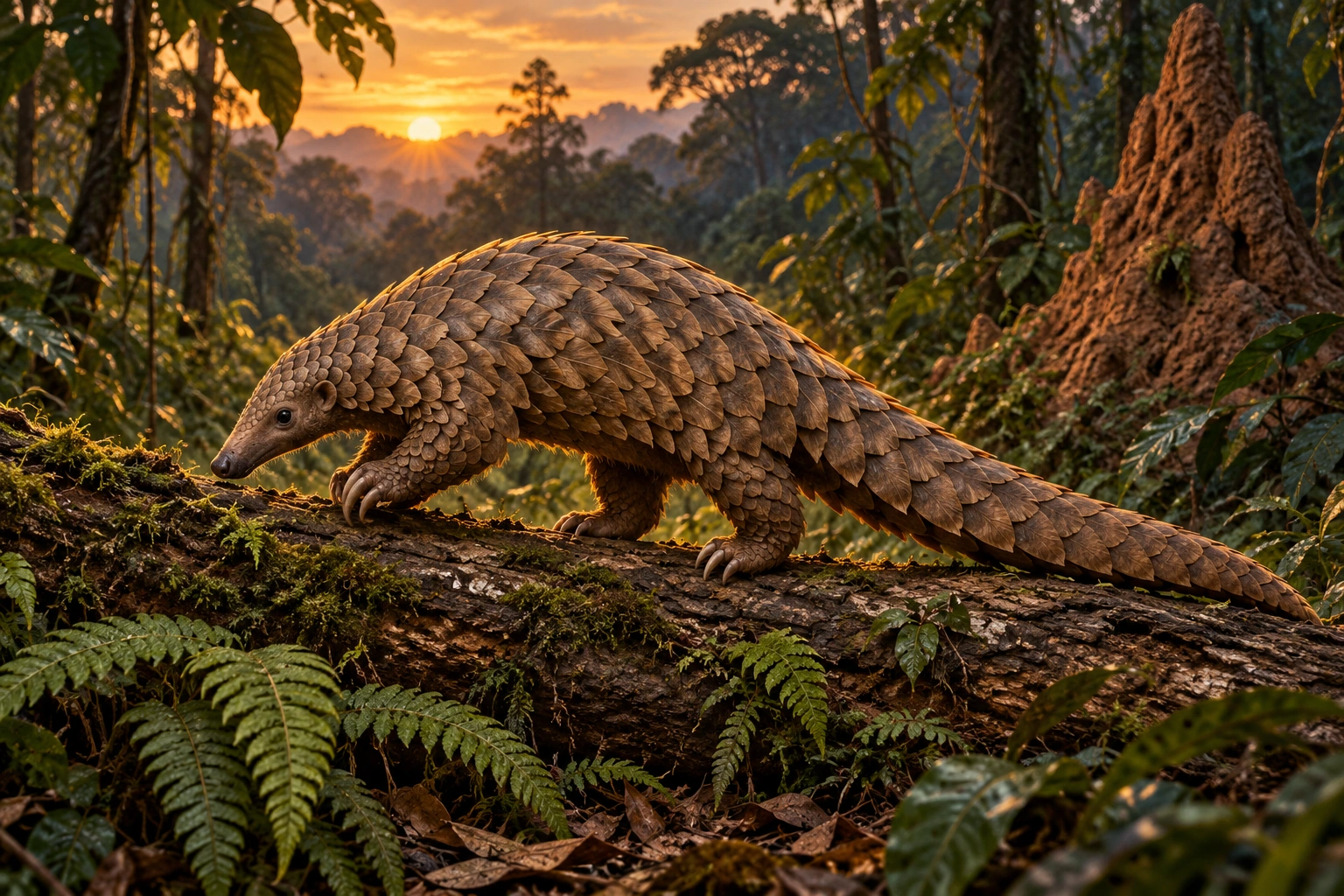
Scales do not make it a reptile
A pangolin can look like a small walking pine cone, but it is a mammal. Its overlapping scales are made of keratin, the structural material also present in human nails. When threatened, it can curl into a ball, protecting the softer underside with its scaled exterior. That defence helps explain the animal's outline, but it does not make a pangolin invulnerable.
Built around tiny prey
WWF and the IUCN Pangolin Specialist Group describe a diet centred on ants and termites. Pangolins lack teeth and use a long, sticky tongue to gather prey. Their claws help them access insect nests. This combination makes their anatomy easier to understand: the snout, tongue, claws and scales are parts of a specialised way of living, not random oddities. Different pangolin species also occupy different environments, so one illustration cannot represent every species' behaviour or habitat.
The weakness of a remarkable defence
Curling up is no protection against a person who can simply pick the animal up. Conservation sources identify hunting and illegal trade among the major threats. Admiring a pangolin should therefore lead to curiosity about its habitat and conservation, not a desire to keep one as a pet or buy products made from it. For Stranger Animals, the interesting story is the real animal: unusual enough without inventing magical scales, a monstrous temperament or a single behaviour shared by every pangolin.