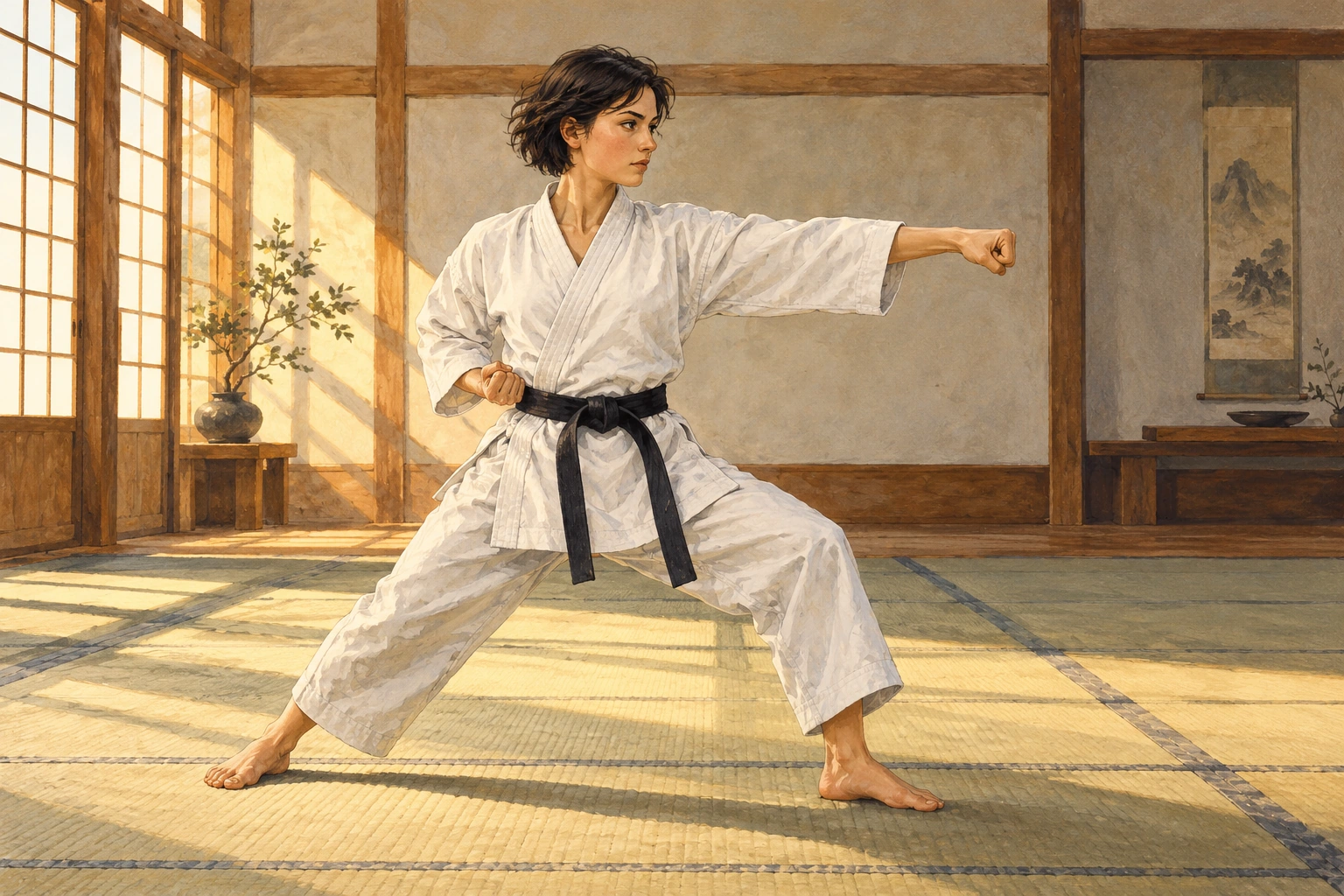
A sequence with purpose
In a kata competition, an athlete performs a sequence of techniques before a judging panel. There is no opponent exchanging blows during an individual performance. That does not make it merely choreography: the 2026 WKF rules assess stances, techniques, transitions, breathing, focus, strength, speed and balance. Remembering the sequence is only part of what matters.
For a spectator, changes of direction offer a useful starting point. Watch how the body travels between positions and how each technique finishes without a loss of stability. The quieter moments can reveal as much as the most dramatic movement.
An opponent changes the problem
Kumite introduces an opponent who makes decisions, moves and responds. Under WKF rules, a scoring technique must meet criteria including good form, sporting attitude, vigorous application, awareness of the opponent, timing and correct distance. Excessive contact is prohibited: hitting harder does not automatically mean performing better.
Valid punches and hand strikes score one point; valid kicks to the body score two; valid kicks to the upper target area score three. These are orientation points, not a replacement for the full rules or their age-specific provisions.
Look beyond the spectacle
In kata, pick one transition and watch whether the movement, support and technique fit together. In kumite, follow the gap between the athletes before and after an attack. These are viewing suggestions, not a way to settle every judging decision from the stands.
Team kata also exists. WKF medal matches include bunkai, the application of the movements with partners. This explanation concerns WKF competition; other formats and styles may work differently. Knowing the framework lets you appreciate both disciplines without mistaking their different objectives for a difference in seriousness.