Cloth is part of the exchange
In gi BJJ, the jacket and trousers provide regulated gripping points. IBJJF even requires the fabric not to be so thick or rigid that it prevents an opponent from gripping it. Clothing is therefore more than a uniform: it takes part in the interaction between the athletes.
That option disappears in no-gi. IBJJF rules make grabbing either your opponent’s uniform or your own a foul. Wearing a rashguard does not allow you to use it like a lapel. This specific distinction explains more than simply labelling one format fast and the other slow.
Change the question before the technique
As a learning suggestion, ask your coach what a cloth grip was doing: restricting movement, maintaining distance or keeping a connection. You can then explore a permitted alternative for the same situation in no-gi. Not every grip has a direct equivalent, and not every class exercise transfers without adjustment.
When watching a bout in each format, start with where the athletes hold one another and what happens when that connection breaks. It is an accessible comparison that does not require deciding which version represents the only authentic jiu-jitsu.
Competition needs another check
IBJJF publishes separate uniform requirements for gi and no-gi. They cover matters such as gi materials and colours, and the requirements for fitted tops and shorts in no-gi. Clothing that is suitable for an ordinary training session is not automatically legal for competition.
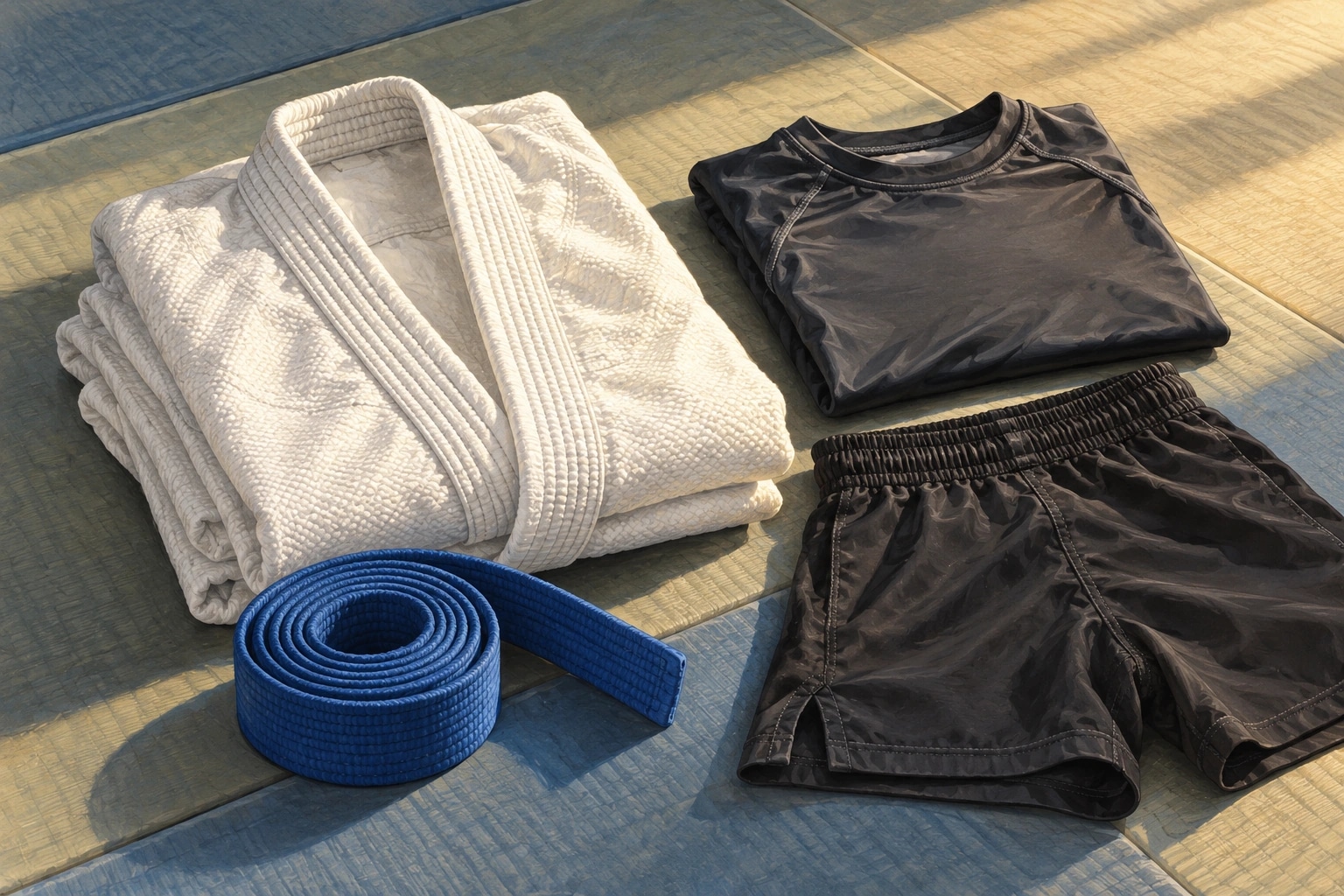
Permitted techniques also depend on the division and the applicable rules. Removing the gi does not mean every submission becomes legal. Before entering, check the organiser’s rules and discuss uncertainties with your academy. The illustration accompanying this article represents the two kinds of equipment; it does not certify any item as competition-approved.