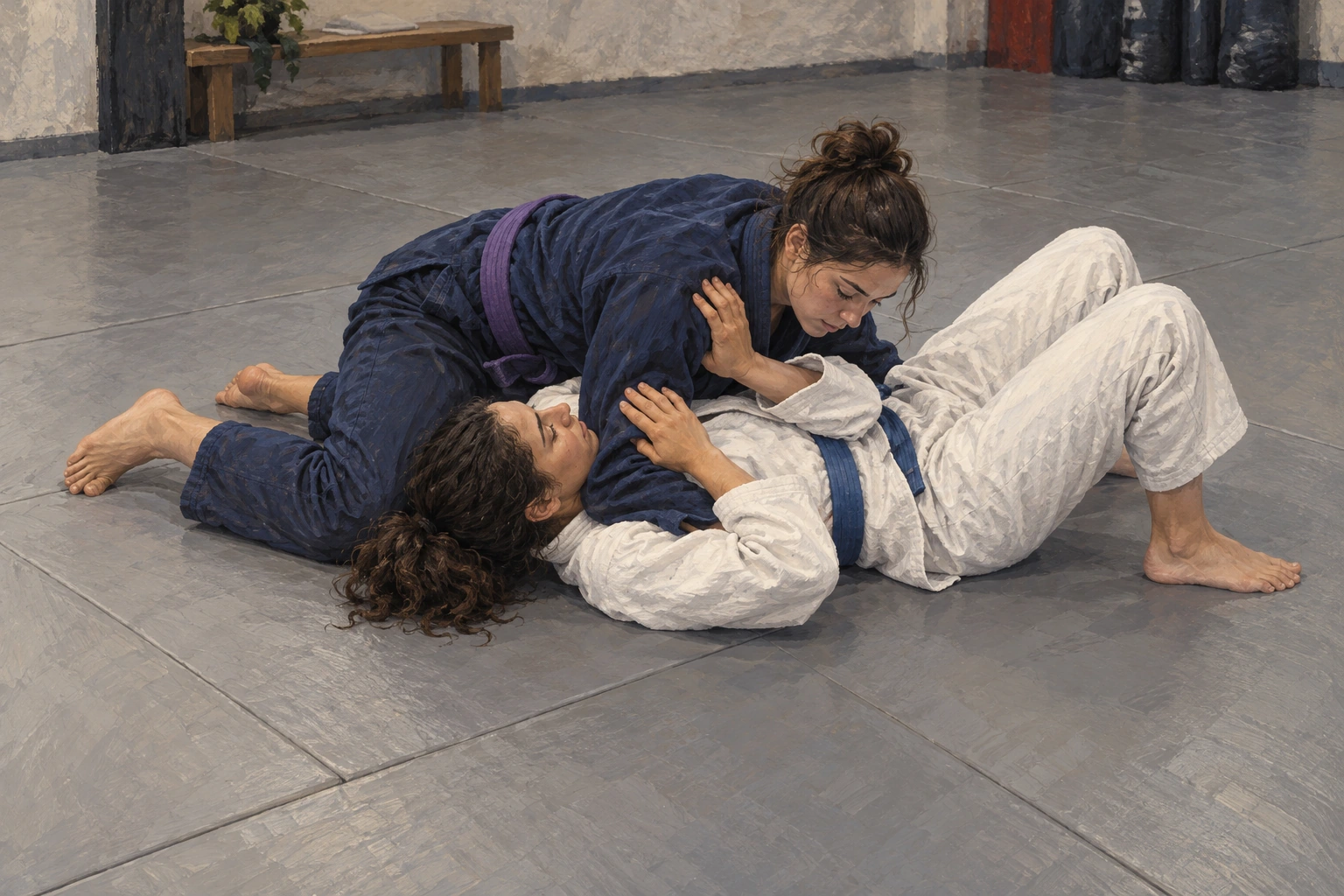
Three points, two conditions
A quick pass can look complete before the referee awards anything. Article 4.2 of the consulted IBJJF rulebook, version 6.1 from 2024, awards three points for a guard pass: the top athlete must overcome the bottom athlete’s legs and maintain side control or north-south for three seconds. Reaching the side and establishing control there are different parts of the same scoring action.
Half guard still matters
The rules define guard through the use of one or both legs to block access to side control or north-south. They also describe half guard, where the bottom athlete traps one of the top athlete’s legs. Chest position therefore does not tell the whole story. Even when the torso has advanced, a trapped leg can explain why the pass remains incomplete. Watch the entire position before interpreting the scoreboard.
What a submission changes
Article 3.3 adds an important condition: an athlete who reaches a scoring position while caught in a submission must escape and stabilise for three seconds to receive those points. Counting from the first apparent arrival at the side is not enough. This helps explain some delays in a referee’s signal, although judging a particular sequence requires the full action and its rules context.
A guide for your next match
Follow three moments: when the legs stop blocking the pass, which control the passer establishes and whether it is maintained. Then watch the referee’s signal. Replaying a sequence helps separate transition from stabilisation without reducing the match to a still image. This explanation concerns IBJJF scoring; submission-only events or other organisers may use different rules. Check the format before comparing results.